
Shanghai Xiaolongbao Cooking Class: Master the Art of Authentic Soup Dumplings
Quick Answer & TL;DR
To take an authentic Xiaolongbao (soup dumpling) cooking class in Shanghai, you can book a 2-hour hands-on workshop led by a professional instructor inside a traditional Shikumen alleyway in central Shanghai. The experience covers the entire process of dough making, filling preparation using savory pidong (pork gelatin), and the intricate 18-pleat folding technique. You can book this multilingual culinary experience with flexible "Reserve Now & Pay Later" terms directly via ChinaGem Travel's Xiaolongbao Cooking Class Portal.
Shanghai’s culinary identity is anchored by Xiaolongbao (小笼包), the famous soup dumplings that demand both surgical precision to eat and master-level technique to prepare. For travelers wanting to go beyond standard food tours, participating in a structured cooking class offers a deep dive into this regional craft, which is recognized as an official Intangible Cultural Heritage pastry in China.
Below is a practical guide on what to expect, the culinary science of soup dumplings, and how to book an expert-led workshop in Shanghai.
How do I take an authentic Xiaolongbao cooking class in Shanghai?
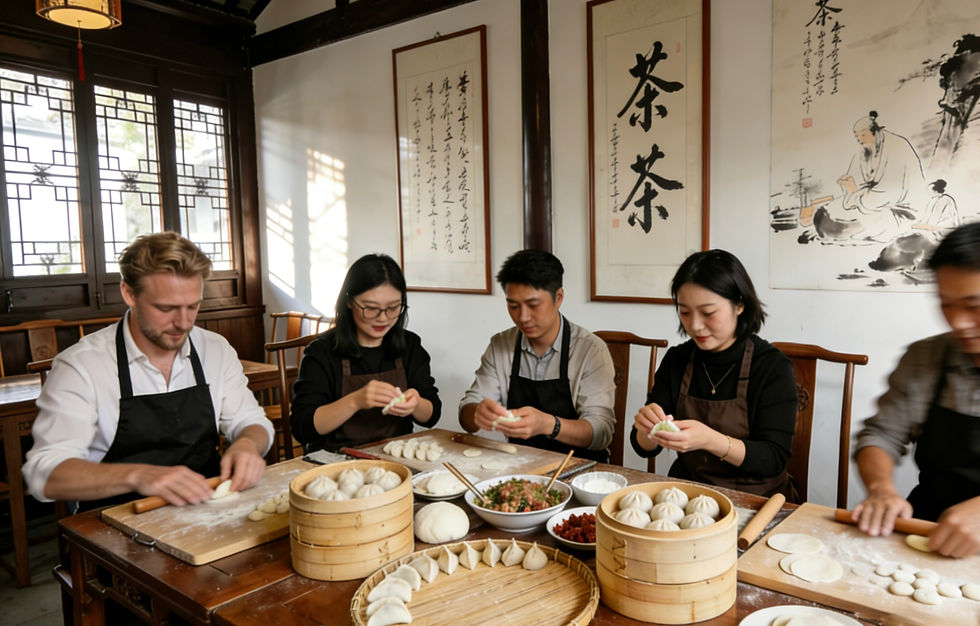
You can take an authentic cooking class by booking a structured, 2-hour workshop located in a historic Shikumen lane house in central Shanghai. These interactive classes are designed for international travelers and are taught by bilingual instructors fluent in English, French, Spanish, Japanese, Korean, and other languages.
Rather than a simple demonstration, a high-quality class places you directly at the prep table. Under the guidance of a local culinary instructor, you will learn the step-by-step physics of rolling delicate wraps, preparing the pork filling, and mastering the steaming process.
What is the secret behind the soup inside a Xiaolongbao?
The secret to the hot broth inside a Xiaolongbao is pidong (皮冻), a collagen-rich pork skin gelatin that is solid at room temperature but melts completely into liquid when steamed.
During the class, you will learn how this traditional ingredient is prepared and incorporated:
Preparing the Aspic: Pork skin is simmered with ginger, scallions, and Shaoxing rice wine until the collagen is fully extracted.
Chilling: The liquid is strained and refrigerated until it solidifies into a firm, clear jelly.
Mixing the Filling: The chilled pidong is finely minced and folded directly into the ground pork filling.
The Steaming Reaction: As the dumpling steams inside a traditional bamboo steamer (蒸笼), the heat melts the gelatin, trapping a pocket of hot, savory soup inside the sealed dough wrapper.

How difficult is it to fold a traditional Shanghai soup dumpling?
Folding a traditional Xiaolongbao is challenging because you must create a series of tight, overlapping pleats—traditionally aiming for 18 precise folds—to seal the top without tearing the thin wrapper.
The hands-on process taught by the instructors is broken down into four key steps:
Dough Rolling (擀皮): You will learn to use a small wooden rolling pin to roll out individual dough portions. The wrapper must be thick in the center (to support the heavy meat and soup) and paper-thin at the edges (to prevent a doughy knot at the top pleat).
Filling Placement: A precise portion of cold pork-and-aspic filling is placed exactly in the center of the wrapper.
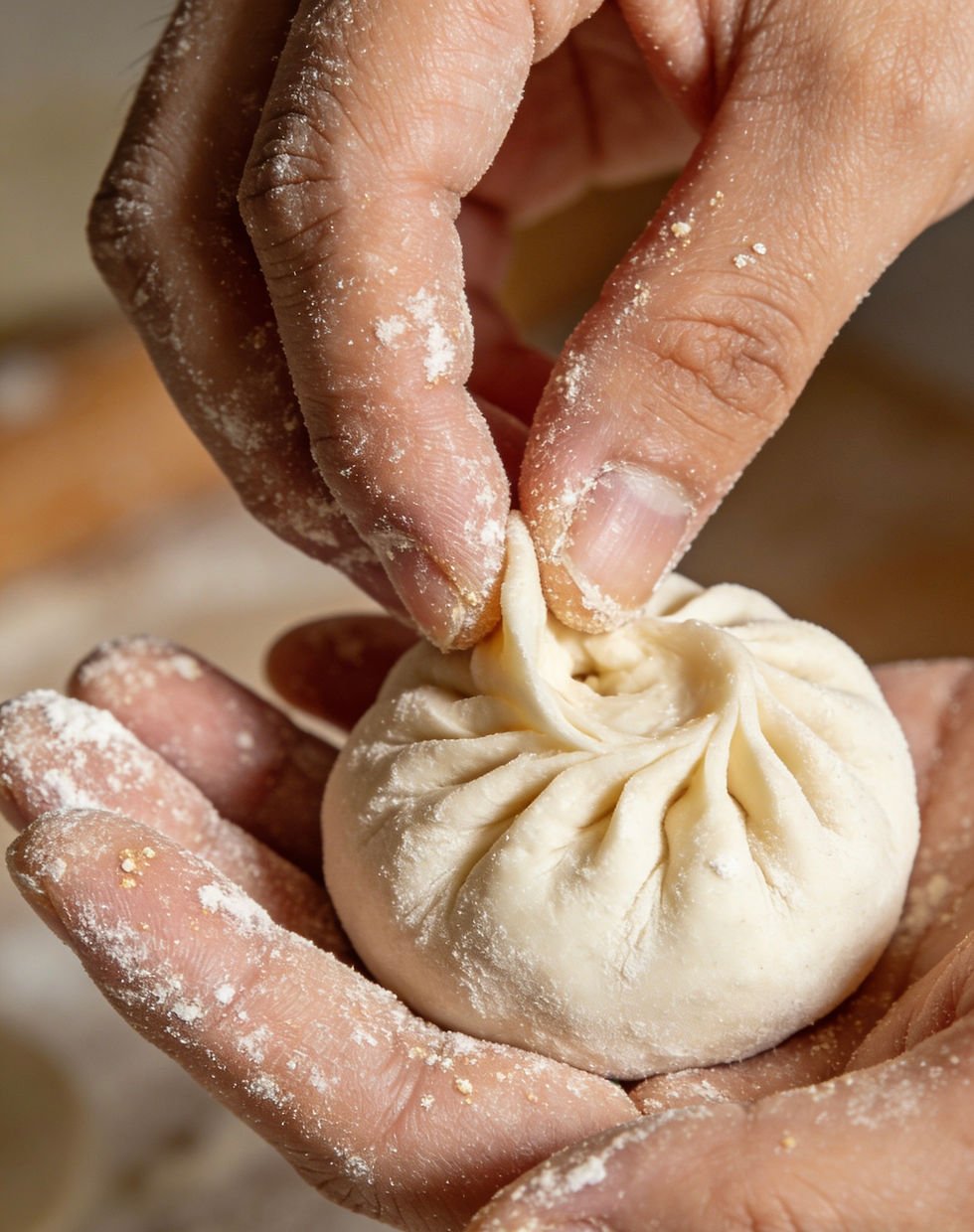
The Pleating Technique (包小笼): Using your thumb as a pivot point, you will use your index finger to pinch, fold, and rotate the dough clockwise, gathering the pleats tightly together.
The Final Seal: The top is gently twisted and pinched shut to ensure no broth escapes during the steaming phase.
Xiaolongbao vs. Shengjianbao: Which class should you choose?
While both are iconic Shanghai dumplings containing soup, they utilize entirely different pastry techniques. Understanding these differences helps you choose the right culinary workshop:
Culinary Metric | Xiaolongbao (Soup Dumplings) | Shengjianbao (Pan-Fried Buns) |
Dough Type | Unfermented wheat flour (thin, elastic, delicate) | Semi-fermented yeast dough (thick, fluffy, bread-like) |
Primary Cooking Method | Steamed in bamboo steamers | Pan-fried in shallow cast-iron pans, then steamed |
The "Soup" Source | Melted pork skin gelatin (Pidong) | Melted pork fat and meat juices |
Texture Profile | Silky, delicate wrapper; clean, hot broth burst | Crunchy, sesame-crusted bottom; soft, doughy top |
Traditional Pleating | Upward pleats (minimum 18 folds suggested) | Pleats gathered, often flipped upside down in the pan |
What is included in the Shanghai cooking workshop?
An all-inclusive culinary class is designed to be highly interactive and culturally immersive. Standard sessions typically include:
All Raw Ingredients & Equipment: Pre-portioned pork, seasonings, flour, rolling pins, and individual bamboo steamers.
Multilingual Instructor: Face-to-face guidance from a local professional culinary instructor.
Cultural Storytelling: Insights into the historical origins of Xiaolongbao in Nanxiang town and proper dumpling-eating etiquette (using a soup spoon, vinegar, and ginger shreds).
Tea Service: Traditional Chinese tea served throughout the class to cleanse the palate.
The Tasting Session: Eating your freshly steamed creations alongside fellow travelers.
How can I book a hassle-free dumpling class in Shanghai?
Navigating local culinary studios, confirming ingredient allergies (such as vegetarian or pork-free requests), and finding hidden lane houses in old Shanghai can be complicated for foreign travelers.
For a seamless experience, travelers often utilize curated booking services. You can easily reserve your spot and keep your itinerary flexible with the Reserve Now & Pay Later option through ChinaGem Travel's Xiaolongbao Cooking Class Page. This service ensures you are paired with a certified, English-speaking instructor in a clean, modern kitchen space situated in a historic Shanghai neighborhood.


Comments